
2D In Vitro Models
Human cells such as primary cells, immortalised cell lines, multipotent adult stem cells, or induced pluripotent stem cells (iPSCs) are cultured as monolayers on treated glass, plastic, or composite surfaces, or grown in suspension if the cells are non-adherent.
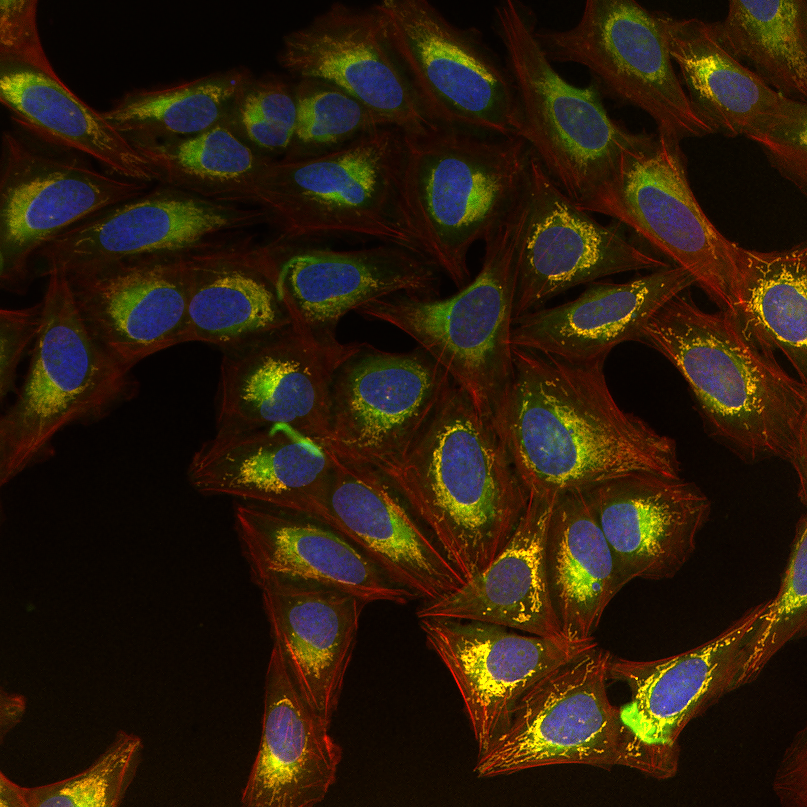
Courtesy of Concept Life Sciences
2D In Vitro Models Applications
- Basic research and early drug discovery: Suitable for investigating cellular biology, drug mechanisms, and drug responses.
- Disease modelling: Enables studying of cells from donors with specific diseases or induction of a disease phenotype.
- Drug screening: Provides a system for testing drug efficacy and toxicity, functional genomics, and predictions of drug metabolism and clearance (ADME).
- Biopharmaceutical and vaccine production: Used for manufacturing therapeutic proteins, antibodies, and vaccines, such as the polio vaccine.
2D In Vitro Models Advantages
- Ease of observation: Adherent cells spread out on a flat surface, making it easier to observe and measure cellular behaviour.
- High reproducibility: Often consistent and reproducible across studies.
- High-throughput capabilities: Can be used in high-throughput studies and screening applications. This is most applicable to cell line screening as they can be transfected to express the target of interest and grown rapidly.
- Allows hit triage and large scale screening: The best hits can then be taken forward to 3D models for characterisation.
- Simplicity & cost-effectiveness: Setting up 2D cultures is relatively straightforward and less expensive compared to more complex culture systems.
2D In Vitro Models Limitations
- Limited mimicry of in vivo conditions: Do not accurately represent multi-cellular environments or the ECM. This can significantly alter cell differentiation.
- Poor biomimicry: Inadequate representation of protein and gene expression profiles, tissue-specific transporters, and cell junctions identified in vivo.
- Availability of primary cells: If primary cells are utilised, their limited availability and proliferation capacity can pose challenges for long-term studies.
- Genetic drift: Random changes in the genetic composition of cells can occur following high number of passages.
- Static culture conditions: Without perfusion, 2D models cannot fully replicate blood flow or nutrient-rich interstitial fluid, limiting their use in studying processes like metastasis, immune recruitment, or drug dosing.