
Tuning Tissue Stiffness to Uncover ER Stress Mechanisms in Disease
Tissue stiffness is a key regulator of cellular behaviour, and its disruption is a hallmark of diseases such as fibrosis, cancer, cardiovascular disease, and neurodegeneration. Many of these conditions are also linked to stress within the endoplasmic reticulum (ER)- the organelle responsible for protein folding and quality control.
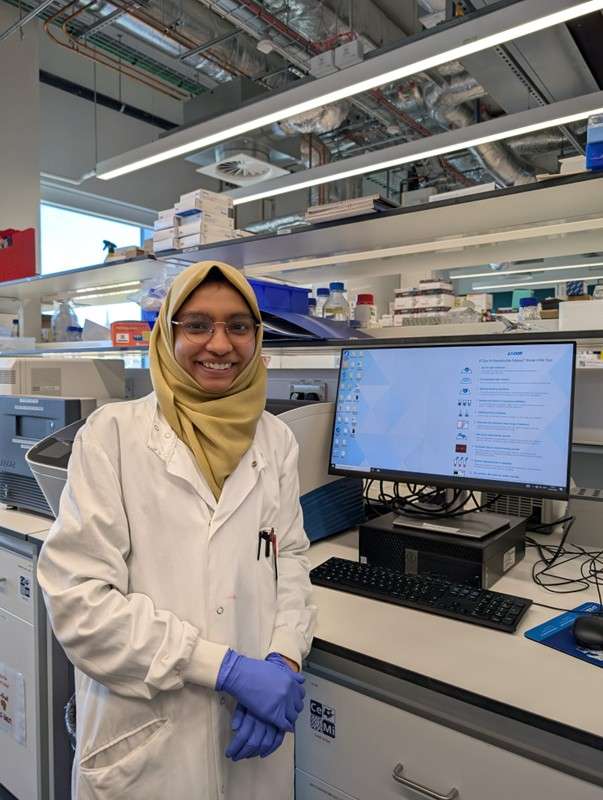
Shaima Riha is investigating the emerging relationship between mechanical cues from the extracellular matrix (ECM) and ER function, with a focus on how matrix stiffness influences the expression of ER-resident chaperones involved in maintaining protein homeostasis, also known as proteostasis.
Recreating Physiologically Relevant Stiffness
To study this mechanobiological interface, she is using tuneable polyacrylamide (PAAm) hydrogels to recreate physiologically relevant stiffness levels in vitro. These synthetic, animal-free hydrogels are uniformly coated with collagen I to ensure consistent cell adhesion across varying stiffness conditions. Human mesenchymal stem cells (MSCs) and brain endothelial cells, representing regenerative and neurovascular systems, are cultured on these substrates to explore how ECM mechanics affect ER stress responses, protein production, and chaperone expression and offer insights into stiffness-sensitive pathways.
By combining precisely controlled biophysical environments with human cell models, this project provides a platform to dissect the mechanosensitive regulation of intracellular pathways, relevant to understand disease mechanisms and inform regenerative medicine strategies.
Shaima Riha
This project bridges human-specific, animal-free technologies with cutting-edge mechanobiology to uncover how tissue stiffness influences proteostasis. In doing so we are advancing our understanding of disease mechanisms and supporting the development of future strategies in regenerative medicine and therapeutics