
MUMS: Modelling Under-Represented Menopausal Status in an Animal-Free 3D Tumour-Adipose Platform in the Tumour Microenvironment
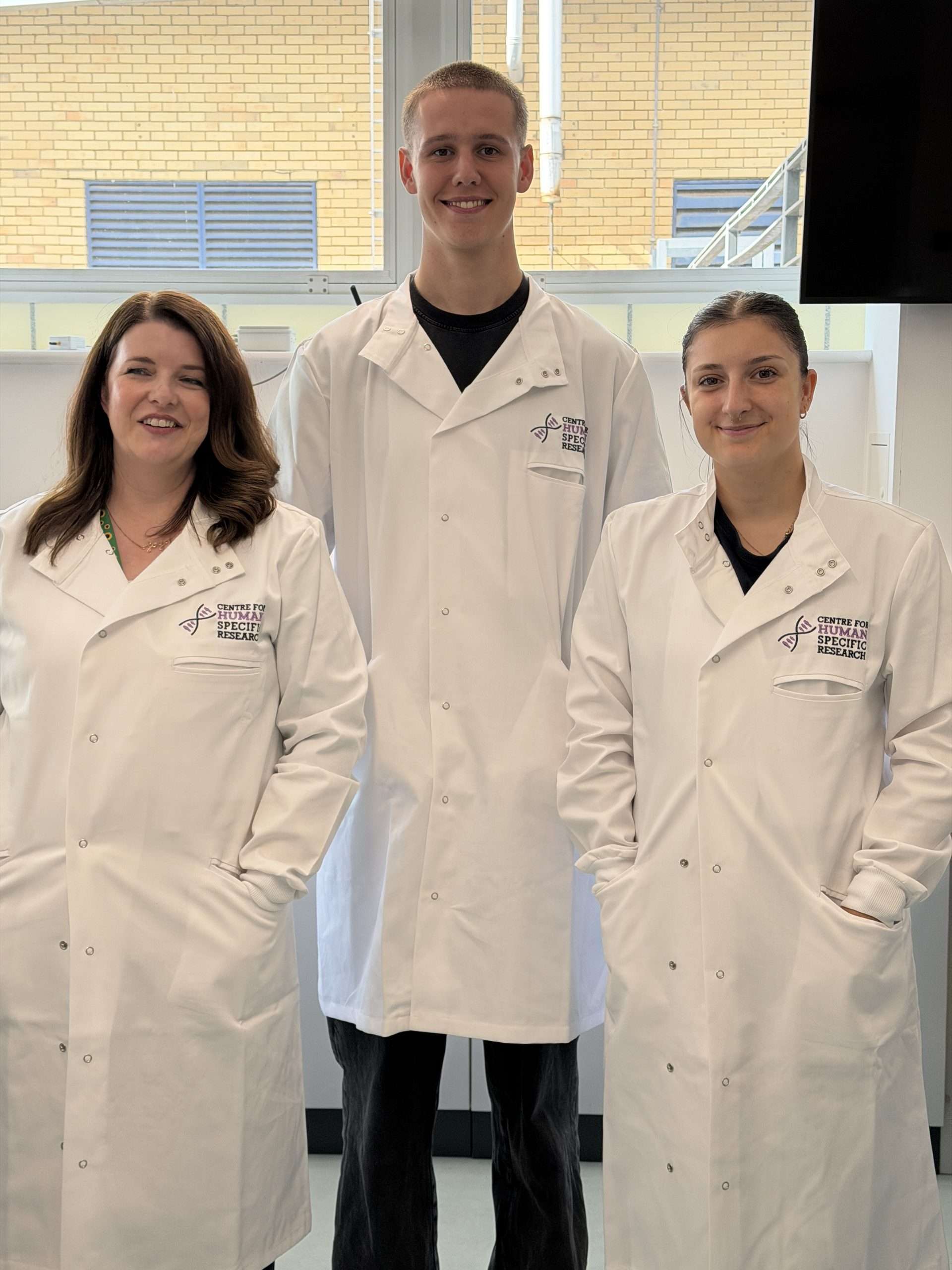
Dr Mhairi Morris, at Loughborough University, is developing a human-specific 3D breast cancer model to investigate how menopausal hormonal changes and adipose tissue influence tumour behaviour. By incorporating breast cancer cells, adipocytes, and fibroblasts within a 3D model, the project aims to improve understanding of the complex interactions that shape breast cancer progression and establish a more physiologically relevant platform for studying the disease.
Modelling an Under-Represented Aspect of Breast Cancer Biology
Breast cancer is a heterogeneous disease in which tumour development and progression are influenced not only by cancer cells themselves, but also by the surrounding tumour microenvironment. Interactions between malignant cells, stromal cells, adipose tissue, and circulating hormones can influence tumour behaviour.
Menopausal status is particularly relevant. Menopause results in substantial changes in systemic hormone levels, including oestrogen, with consequences for breast biology and the microenvironment in which tumours develop. However, the hormonal differences associated with pre- and post-menopausal states are rarely incorporated into laboratory models.
At the same time, adipose tissue is increasingly recognised as an active component of the tumour microenvironment rather than simply an energy store. Adipocytes communicate with neighbouring cells, while inflammation within adipose tissue can alter the local microenvironment and influence processes associated with tumour development and progression.
Understanding how these factors interact requires experimental models capable of representing their combined effects within a human biological context.
Developing a Human-Specific 3D Tumour-Adipose Model
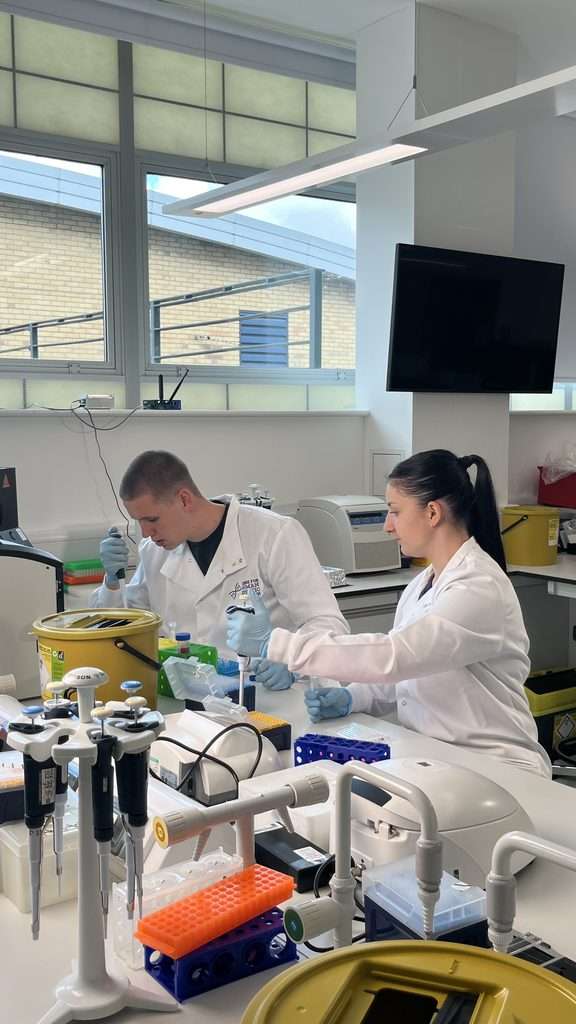
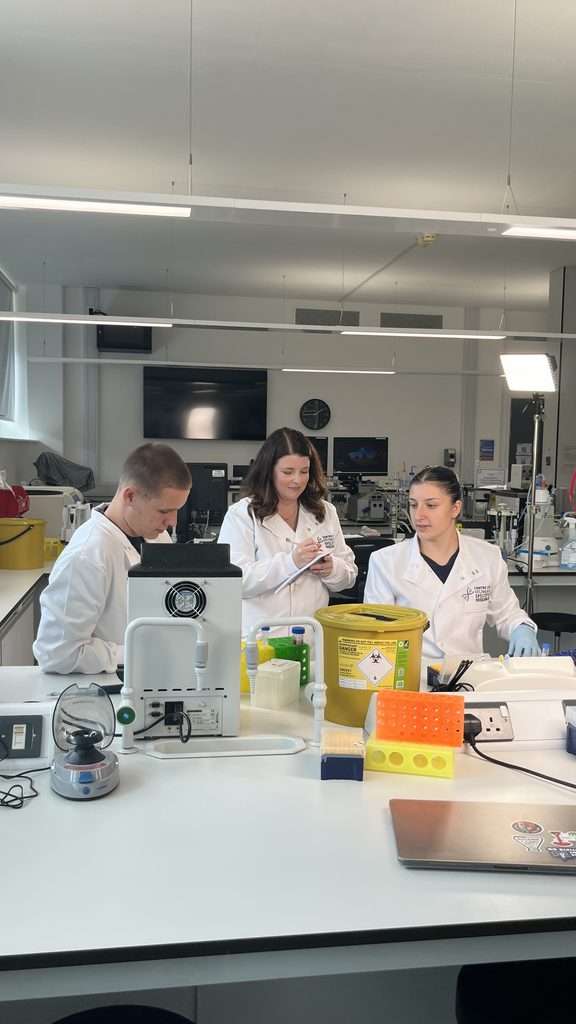
Dr Mhairi Morris and her team are developing a fully human 3D model designed to capture key features of the breast tumour microenvironment that are often absent from conventional culture systems.
The model will bring together three key human cell types: breast cancer cells, adipocytes, and fibroblasts. Combining these populations within a 3D culture system will enable the researchers to investigate cellular interactions and extracellular matrix remodelling in a setting that more closely represents the complexity of human breast tissue.
Importantly, the team will incorporate hormonal conditions associated with menopausal status. This will provide a platform for investigating how changes in the hormonal environment interact with adipose and stromal components of the tumour microenvironment to influence breast cancer cell behaviour.
By modelling these variables together rather than studying individual cell populations or biological factors in isolation, the project aims to provide new insight into the mechanisms that may contribute to breast cancer progression in different hormonal contexts.
Improving Experimental Control and Human Relevance
Developing a model capable of investigating hormone-dependent biology requires careful control of the experimental environment. Commonly used cell culture materials can contain complex and incompletely defined mixtures of hormones, growth factors, and other biologically active molecules, introducing variables that may confound the biological processes under investigation.
This is particularly important when examining menopausal hormone signalling. Foetal calf serum, for example, can contain variable concentrations of oestrogen, growth factors and lipids, while commonly used tumour-derived extracellular matrix preparations contain mixtures of biologically active components.
The team will therefore use defined alternatives, including serum-free media supplements, recombinant human collagen, and defined extracellular matrix components. Reducing the influence of poorly characterised biological materials should allow observed effects to be attributed more confidently to the experimental variables under investigation.
This approach has the potential to improve reproducibility while creating a model that more accurately addresses questions of human breast cancer biology.
Broader Impact
The project will establish and document a human-specific experimental platform for investigating the relationship between menopausal status, adipose tissue, and the breast tumour microenvironment.
By representing biological features that are frequently under-represented in conventional breast cancer models, the platform could provide researchers with a valuable tool for investigating mechanisms of disease progression and identifying potential therapeutic targets.
In the longer term, models incorporating patient-relevant hormonal and microenvironmental conditions could contribute to a more mechanistic understanding of breast cancer heterogeneity and support the development and evaluation of therapies within experimental systems designed around human biology.
Quotes

Dr Mhairi Morris
University of Loughborough
“This pilot grant from the Centre will allow us to move away from using any animal-derived products and build this model of breast cancer that mimics different menopausal stages in a completely animal-free way.”

Dr Ross Dobie
Centre for Human Specific Research
“We are delighted to support this innovative research, which addresses an important and often under-represented aspect of breast cancer biology. By bringing together menopausal hormone status and the tumour microenvironment within a fully human 3D model, this project has the potential to provide new insights into how breast cancer develops and progresses. Importantly, it also demonstrates how human-specific approaches can deliver more relevant models of complex disease and help pave the way towards better treatments for patients.”