Leading the way in animal-free technologies: The Centre for Human Specific Research holds its first organ-on-chip training masterclass
What are organ-on-chips?
“Organ-on-chip”(OoC) technologies (also known as microphysiological systems) mimic human organs on a 3D microscopic scale. Human cells are ‘seeded’ (grown) on transparent chips which are about the length of a matchstick and with which, microscopes can be used to visualise the cells. A network of controllable fluid-filled channels can be adjusted to match the specific conditions found in the body. Some organ-on-chip systems combine multiple mini-organs – these communicate with each other, effectively creating a “body-on-chip” system.
Given that over 90% of experiments that show promise in animal experiments subsequently fail in people during clinical trials, there’s clearly an urgent need to develop more human-focused ways of studying diseases and testing drugs. Organ-on-chip technology could be the solution to overcoming these problems. It offers human-relevant insights into how diseases develop, with the potential to find drug targets and test drug responses without using animals.

The organ-on-chip (OoC) masterclass
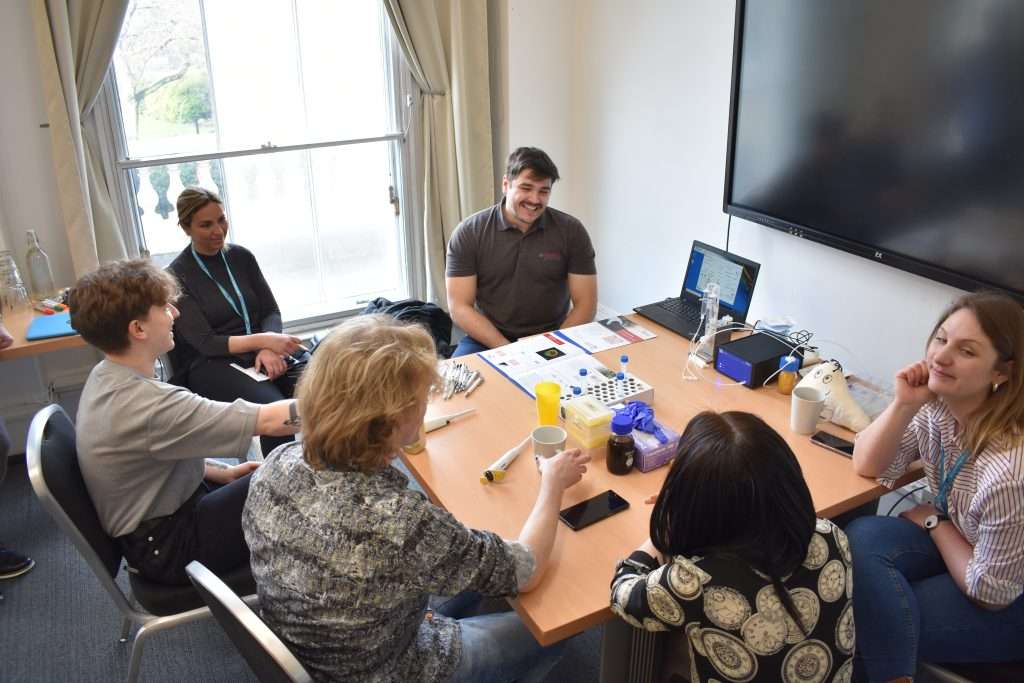
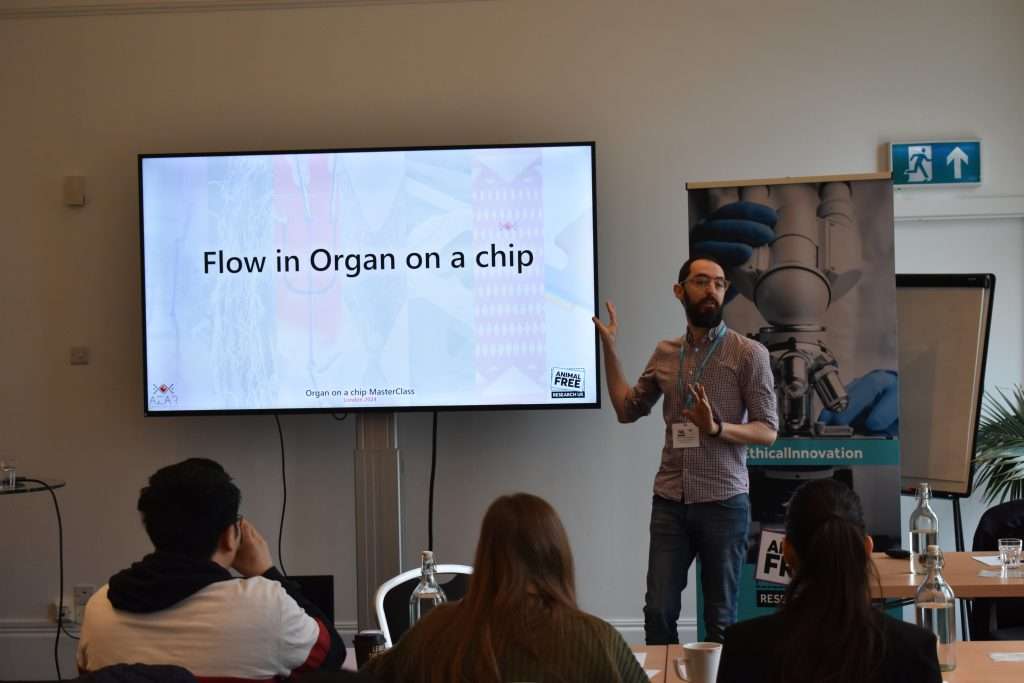
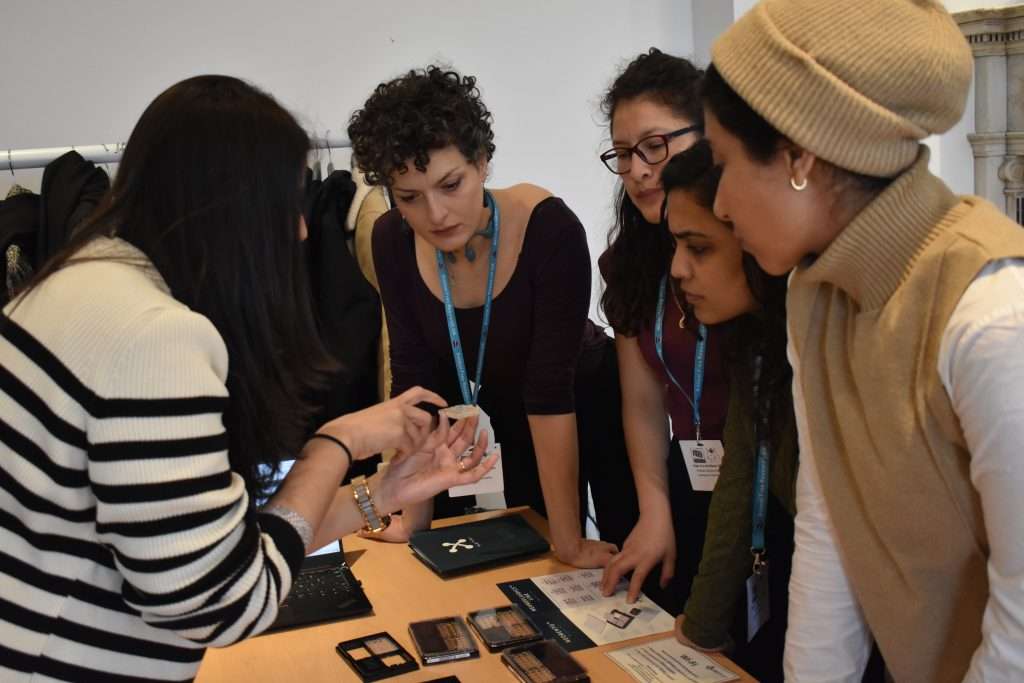
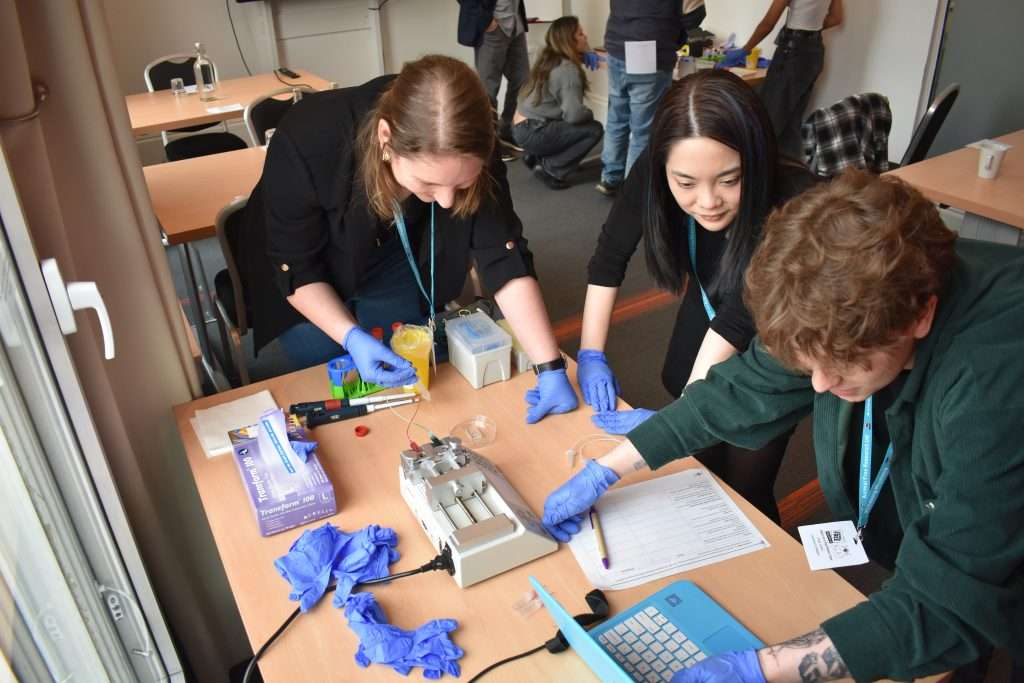
During the 2 day intensive masterclass, held in partnership with AZAR Innovations in London, attendees from academia and industry took part in group discussions and problem solving, specialised lectures and practical hands-on training using a variety of organ-on-chip designs.
Guest expert lecturers Malcolm Wilkinson, Pelin Candarlioglu Deacon and Clive Roper shared their knowledge and expertise, and 4 organ-on-chip companies ibidi GmbH (Thistle Scientific ), NETRI, microfluidic ChipShop GmbH and InSphero demonstrated their products and gave attendees hands-on training on how to use them.
An ‘organ-on-chip challenge’ rounded off the masterclass, with attendees working in groups focused on specific organs/organ systems in the body (liver, lung, cardiovascular and nervous system) that reflected their research interests.
The aim of this was to brainstorm and present each group’s own organ-on-chip design aimed to solve a current unanswered puzzle in that particular disease area. The energy was palpable with enthusiasm and ideas in abundance with a winning design and prize presented to the circulatory system team!
The masterclass aimed to combat one of the obstacles in the uptake of non-animal technologies (also known as ‘new approach methodologies’ or ‘NAMs’), namely a paucity of training. With many organ-on-chips on the market, there is a need for more practical training and awareness of the pros and cons of each model, showcasing each one’s suitability for answering a specific research question.
Furthermore, with the belief that many early career researchers (ECRs) will embrace and promote this animal-replacement technology, the Centre for Human Specific Research subsidised ECR places as part of our commitment to supporting the next generation of researchers to lead the way in animal-free technologies.
The masterclass ended with an informal networking event where attendees reflected on the masterclass and shared their experiences, with many now motivated to push for incorporation of organ-on-chip technology in their workplaces to replace animals, and a commitment to raise awareness of this technology amongst their peers.
“I am now even more motivated to dive into OoC, and talk to decision makers and academics so they embrace this technology in their universities to replace the animal testing with ethical, modern, human relevant alternatives” – Luis Falcón
President GNU Solidario | Advancing Social Medicine