

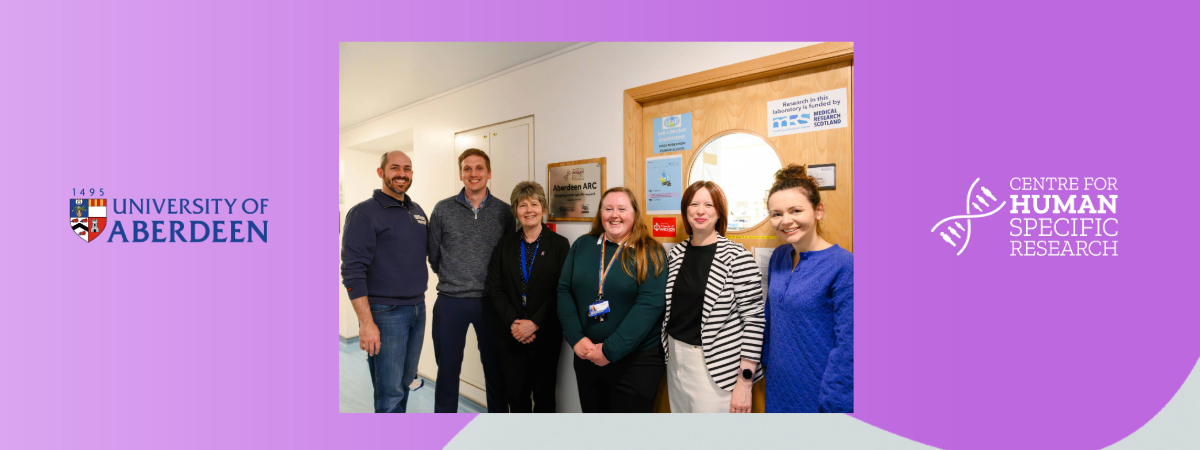
To mark World Animal Free Research Day 2026, the Centre for Human Specific Research is proud to announce the unveiling of the new Aberdeen ARC at the University of Aberdeen, led by Professor Valerie Speirs.
Professor Speirs has been awarded a Centre for Human Specific Research ARC grant, recognising her group’s continued commitment to advancing human-specific research. As an internationally recognised leader and advocate for human-focused breast cancer research, Professor Speirs is at the forefront of developing and applying innovative, animal-free approaches.
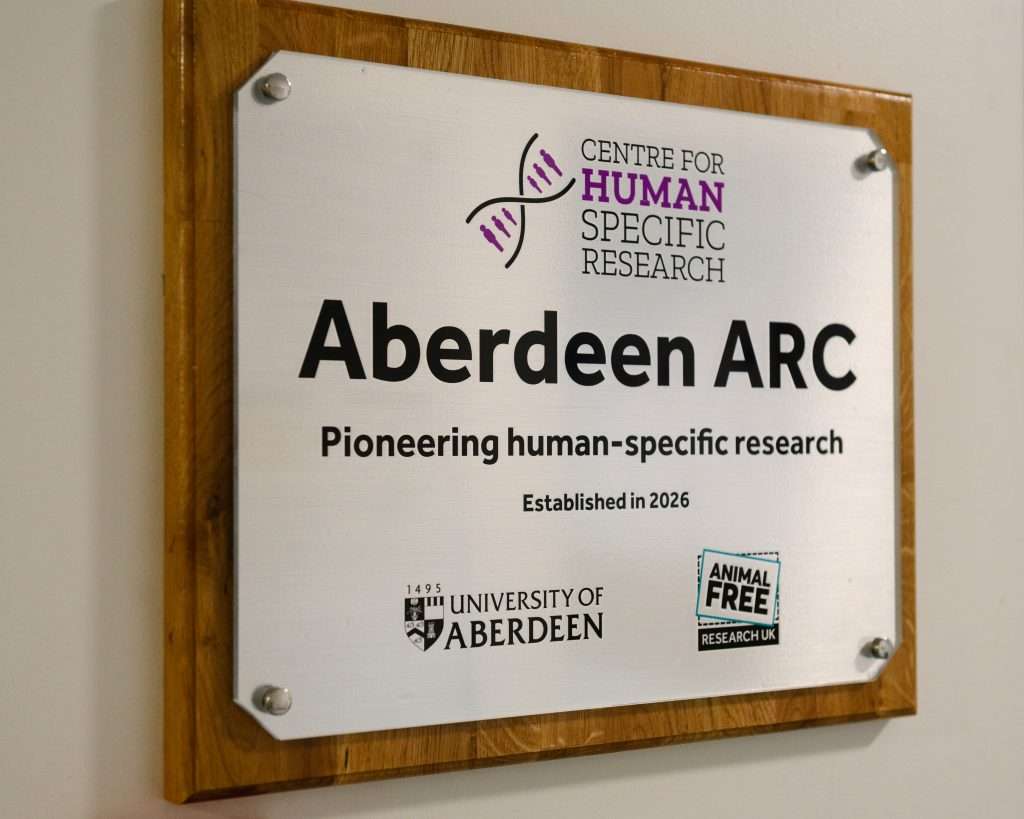
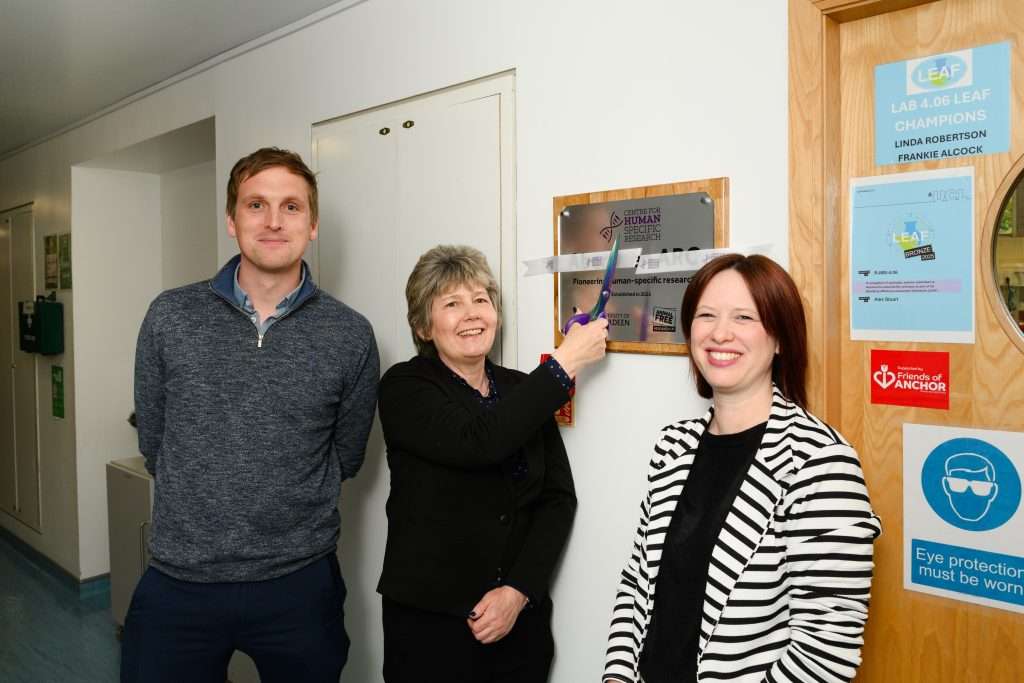
The Centre for Human Specific Research team were delighted to unveil a plaque for this new ARC and see first-hand just some of the human-focused approaches Valerie and her team are continuing to adopt.
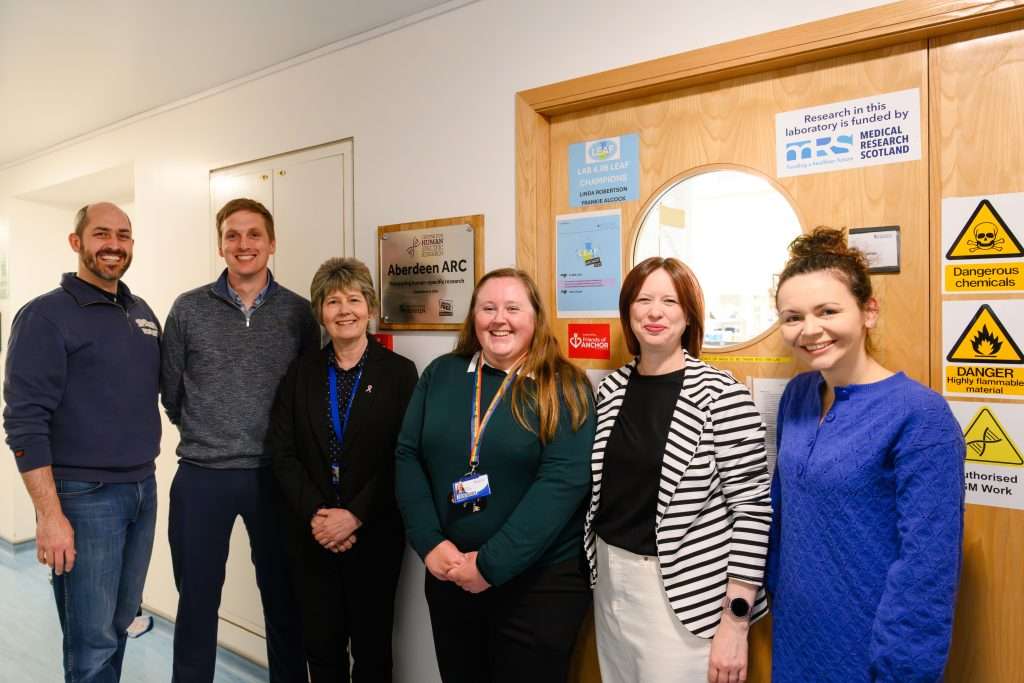
The grant, along with the accompanying plaque, highlights her group as one of the Centre for Human Specific Research’s flagship labs, pioneering human-relevant scientific methods.
Establishing the Aberdeen ARC
The establishment of the Aberdeen ARC reflects the outstanding quality and ambition of the human focused breast cancer research led by Prof Speirs. Her work is widely recognised for its scientific rigour, innovation and leadership, and stands as a powerful example of how human specific methodologies can drive meaningful progress in biomedical research.
“The Centre for Human Specific Research ARC grant will allow my team to continue building our work towards using animal-free approaches in cancer, as well as supporting early to mid-career researchers with innovative ideas for animal-free approaches but maybe don’t know where to start. Currently our work is focused on identifying and implementing robust animal-free replacements in cell culture, which is one of the bread-and-butter experimental approaches that many scientists use.”
Professor Valerie Speirs
Prof Speirs continues:
“I am both humbled and thrilled to receive this wonderful accolade from the Centre for Human Specific Research. More than the plaque itself, it’s the recognition behind it that matters. It gives a sense of pride, but also gratitude towards the many people who have supported me along the way.”
Professor Valerie Speirs
Our ARCs
Over the past decade, our ARCs have demonstrated how sustained partnership with leading laboratories can help shape the direction of an entire field. Against that backdrop, the Aberdeen ARC marks an important next chapter, recognising Valerie’s pioneering contribution to human‑relevant science and the strength of the research environment at Aberdeen.
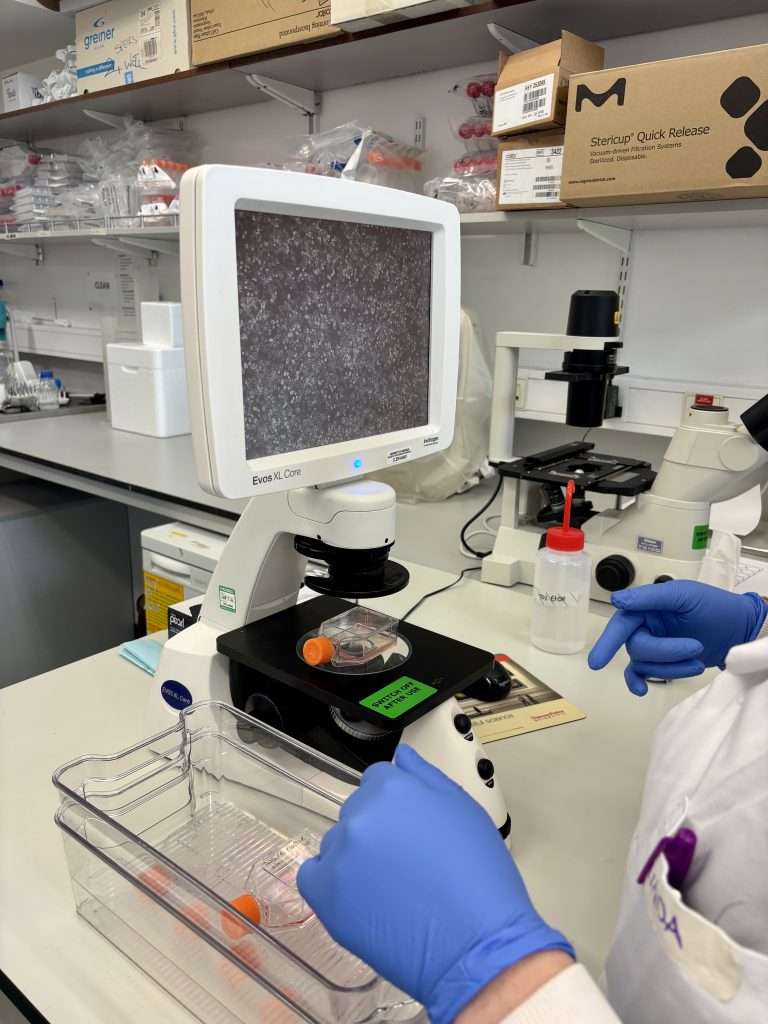
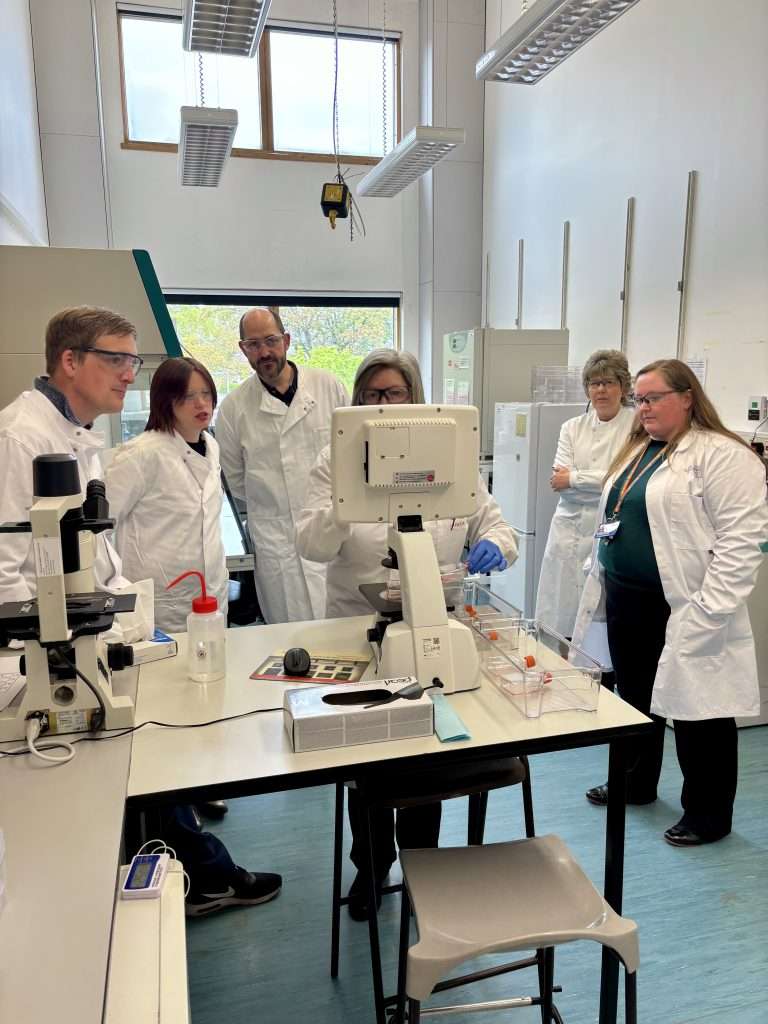
Through the ARC, Professor Speirs will continue to advance innovative human‑specific methodologies while playing a vital role in supporting the next generation of research leaders. This includes progressing animal‑free cell culture systems, developing advanced human breast tissue models, and using interdisciplinary approaches to design experiments that replace the use of animals.
Enabling mid-career researchers
A central aim of the Aberdeen ARC is to enable mid‑career researchers to transition with confidence to human‑specific research programmes, ensuring that expertise, leadership and ambition are embedded and shared across the research community.
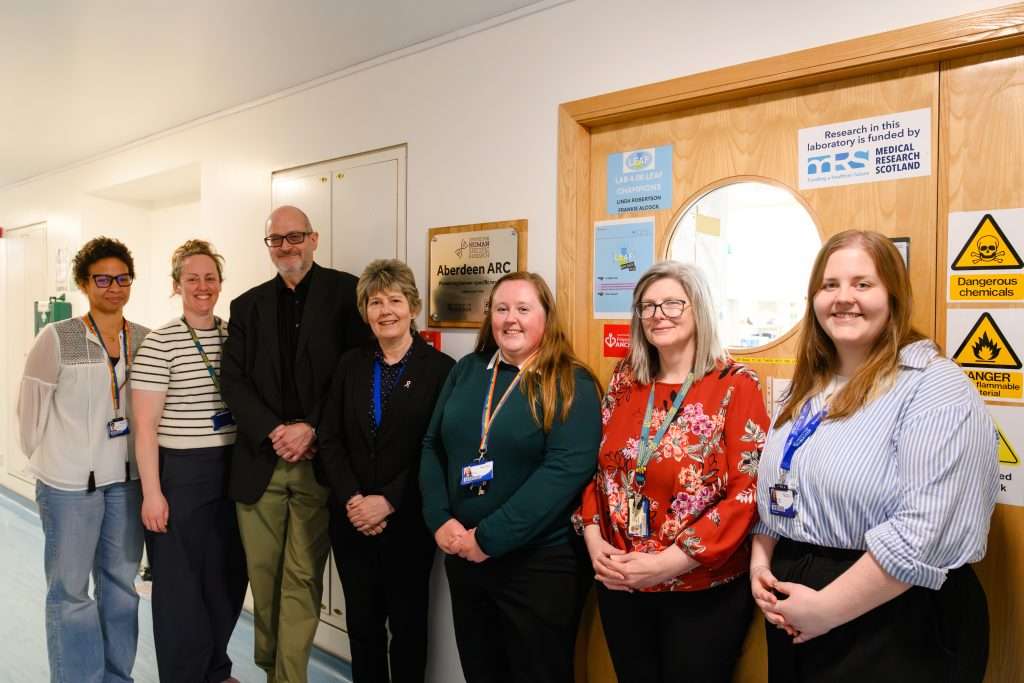
The Aberdeen ARC is recognised as a Centre for Human Specific Research flagship laboratory, reflecting scientific excellence, intellectual leadership and a shared commitment to advancing human‑relevant science. The Centre is proud to work alongside the University of Aberdeen and Professor Speirs as this partnership develops and delivers lasting impact.
“Professor Valerie Speirs has been awarded a Centre for Human Specific Research ARC grant, recognising her group’s continued commitment to advancing human-specific research. As an internationally recognised leader and advocate for human-focused breast cancer research, Professor Speirs is at the forefront of developing and applying innovative, human-centred, animal-free approaches. This grant, along with the accompanying plaque, highlights her group as one of the Centre for Human Specific Research’s flagship labs, pioneering human-relevant scientific methods. Her work stands as a powerful example of how human‑specific approaches can drive meaningful progress in biomedical research.“
Dr Ross Dobie, Head of Science at the Centre for Human Specific Research