

A new era in biomedical research is taking shape as the scientific community increasingly shifts towards human-specific research. Central to this transformation are the individuals and groups actively pursuing the development and adoption of more effective and ethical human-focused approaches. To gain a better understanding of what it takes to make this shift, the Centre for Human Specific Research is asking leading experts to share their story.
In this article, Dr Mary McElroy, Head, Discovery Pharmacology & Toxicology at Charles River Laboratories, provides insights into her team’s journey towards regulatory acceptance of a 3D human airway model for assessing the safety of inhaled chemicals. This model could one day become a recognised tool for regulatory testing of pharmaceuticals, replacing animal tests.
A Human-Focused Airway Model
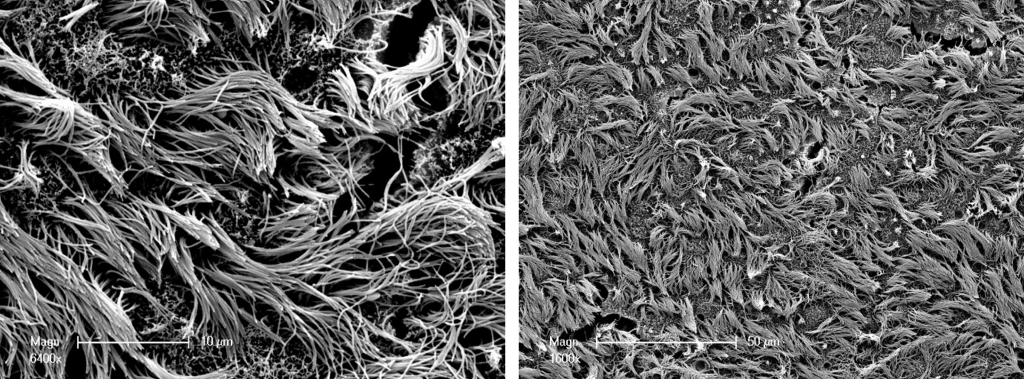
For over ten years, Dr Mary McElroy and her team have been combining data from human-based airway models with traditional animal studies to evaluate the safety, efficacy, and biological activity of inhaled substances, including pharmaceuticals. Their 3D human lung airway models are derived from primary airway epithelial cells, which, when cultured at an air-liquid interface, develop into a structured, multi-layered barrier that closely resembles the architecture and function of the human trachea and bronchi.
The Current Regulatory Landscape
“Pharmaceutical companies are not waiting for regulatory approval to explore toxicity in a human relevant model – often these studies are for internal decision making.“
Dr Mary McElroy
Data generated from human airway models, such as those used by Dr McElroy’s team, are increasingly used to guide internal decision making – yet the data rarely make their way into regulatory submissions. Regulators have long placed greater emphasis on animal studies, with rat inhalation data commonly relied upon to assess upper airway toxicity. This is despite well-established anatomical and genetic differences between rats and humans.
However, the regulatory landscape is beginning to change. A growing momentum around human-specific research has been reflected in policy developments: the FDA recently announced its plans to phase out animal testing requirements, and the UK government has just published its strategy to support the development, validation, and uptake of alternative methods. Even ahead of these announcements, agencies such as the MHRA and FDA have shown a degree of openness to accepting data from alternative approaches – something that Dr McElroy has first-hand experience of. This has even enabled some therapies to progress to clinical trial without animal studies.
“We have already used our lung models for pharmaceutical safety assessment, and the data were accepted as part of an IND application.”
Dr Mary McElroy
These real-word examples of human-focused approaches supporting regulatory filings play a pivotal role in building confidence and promoting adoption. Earlier this year, an industry survey, co-authored by Dr McElroy, highlighted several cases where scientifically justified new approach methodologies (NAMS), including human-focused approaches, were accepted by regulators in place of animal studies.
“To my mind, the BIO NAM’s Task Force paper demonstrates that scientific justification, particularly prior understanding of the pharmacological target, can be sufficient for the regulators to accept a combination of non-animal data to set first-in-human starting dose.”
Dr Mary McElroy
Yet while these are encouraging signs, the use of the human airway models for regulatory submissions is still limited to case-by-case applications. They are not yet approved, or prioritised, by regulators – an essential step before they can be universally recognised as direct replacements for animal tests.
“Currently, human in vitro models for inhaled chemical and pharmaceutical safety assessment are only used on a case-by-case basis.”
Dr Mary McElroy
So, what does the path to regulatory acceptance look like? For many, the process remains unclear, with considerable uncertainty around what is expected for validation of a new human-focused approach. Against this backdrop, Dr McElroy shares her own experience navigating the journey.
Translating Learnings from Chemicals to Pharmaceuticals
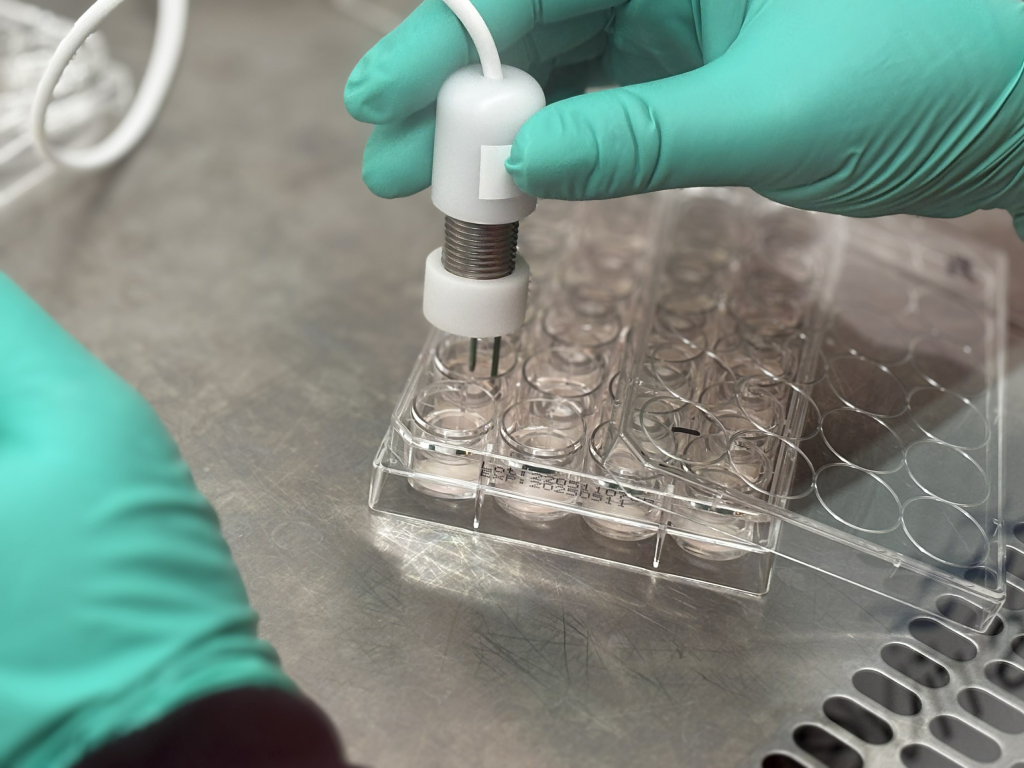
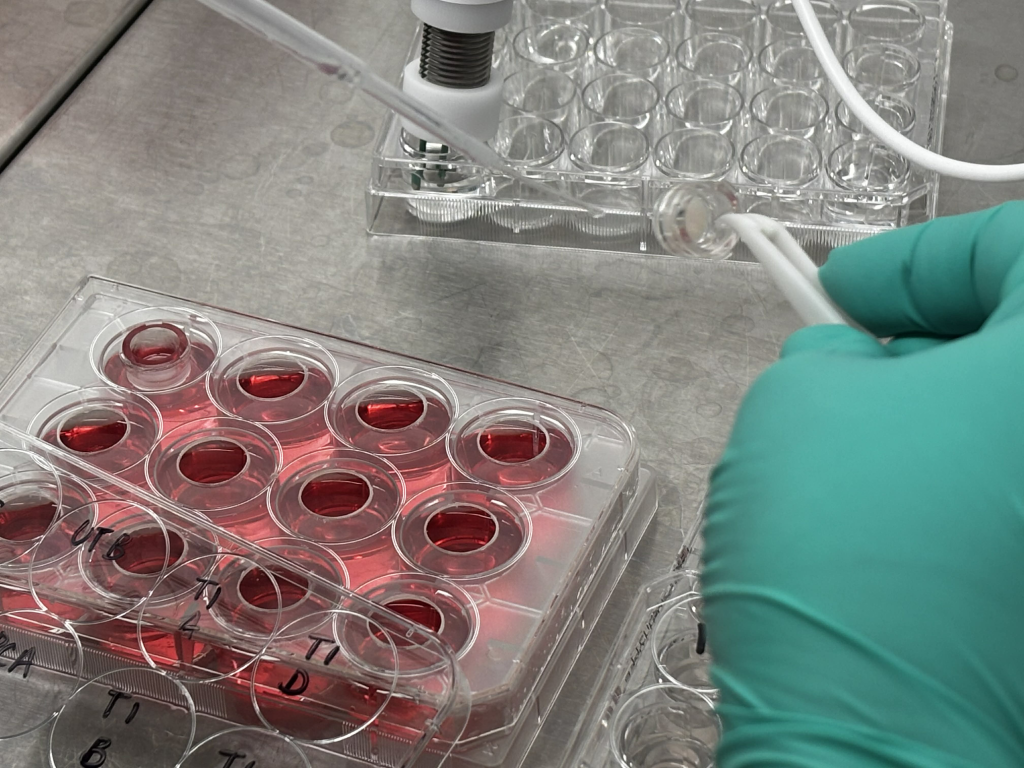
Dr McElroy’s team is pioneering human airway models that have the potential to replace animal studies across industrial, agricultural, and pharmaceutical applications. The group is currently working on a validation project, run in partnership with long-standing collaborator MatTek – an established provider of 3D in vitro inhalation systems. Backed by internal innovation funding and a grant from the American Chemistry Council (ACC), the project aims to build the scientific evidence required for regulatory bodies, such as the Environmental Protection Agency (EPA), to recognise the model as a reliable alternative.
Although the current study is focused on aerosol-delivered chemicals, rather than pharmaceuticals, Dr McElroy believes much of the work will have significant implications for securing regulatory acceptance in Investigational New Drug (IND) applications.
“Learnings from validation and qualification for the human airway models for chemical risk assessment will have real value for safety assessment of pharmaceuticals – particularly if a model is used for regulatory decision making.”
Dr Mary McElroy
A Path to Regulatory Acceptance
While many long-established animal tests have been accepted without formal validation, regulatory agencies remain clear in their expectations for new human-focused methods: data generated from in vitro models must be shown to be reliable, high-quality, and validated before it can be used for regulatory decision-making. Securing this regulatory acceptance can be a lengthy process, often taking more than a decade.
To support progress in this area and accelerate timelines, several guiding frameworks have been introduced in recent years. Dr McElroy’s team chose to align their work with the Interagency Coordinating Committee on the Validation of Alternative Methods (ICCVAM) framework – first outlined in a 2018 roadmap and further expanded in 2024 – while also drawing on the tiered approach proposed by Anderson et al.
“I think most frameworks have similar principles. The ICCVAM framework, however, has received interagency acceptance – pharma and chemical – and this was appealing to us.“
Dr Mary McElroy
The ICCVAM framework outlines key concepts designed to support the validation of new approaches that improve human relevance and replace or reduce the use of animals. For Dr McElroy, the guidelines offered a clean, logical blueprint to follow.
“The ICCVAM framework is conceptually attractive and straight forward to explain: define the context of use, explain how the model is appropriate for this specific context of use, describe the quality, reproducibility and relevance of the model and associated methods, state your quality standards for data collection, review, and presentation, and be transparent about results.“
Dr Mary McElroy
A key consideration when validating human-focused approaches for regulatory consideration is defining their Context of Use (CoU). This sets out the specific circumstances under which the method is valid for regulatory decision-making. No single human-focused model can be expected to address every question; instead, the CoU ensures the method is fit-for-purpose for the stated use.
“For our current ACC project, the CoU focuses on assessing point-of-contact toxicity from inhaled aerosols directly damaging the upper airway.“
Dr Mary McElroy
On the path to regulatory acceptance, Dr McElroy’s team are working to establish OECD guidelines. The OECD (Organisation for Economic Co-operation and Development) develops internationally recognised testing standards that support reliability, consistency, and scientific validity. While not mandatory, creating OECD guidelines for a human-focused approach greatly improve the chances of regulatory acceptance, by signalling that the method has undergone rigorous scientific validation, making it easier for regulators to trust and accept the data.
“If an OECD guideline is accepted then it will serve to provide a standard method for assessment that will be internationally accepted. This will increase the uptake since developers do not have to second guess the regulatory requirements.“
Dr Mary McElroy
At the time of writing, Dr. McElroy’s team is just over halfway through the grant programme to validate and qualify MatTek’s human upper airway models. They have shown inter-lab reproducibility and alignment between assigned hazard rankings and in vitro data for 10 chemicals with known inhalation risks. Next, they will prepare their first manuscript and begin comparing the toxicity of these chemicals when delivered as an aerosol at the air–liquid interface versus in liquid form.
Expert Advice
When considering a path to regulatory acceptance it can be difficult to know where to start. Having already embarked on this journey, Dr McElroy shares her valuable advice on how best to approach the process:
‘I would recommend mapping your idea against the ICCVAM framework, opt for a context of use which is not well addressed using animal data, plan your validation and qualification protocols, and seek regulatory advice early in the process. Build partnerships with experts and suppliers, and participate in consortia focused on NAMs.’
Dr Mary McElroy
As the scientific community navigates this transition toward greater reliance on human-focused approaches, it is essential to share experiences and insights so that others can learn and gain confidence in advancing their own human-specific research. Dr McElroy emphasises the importance of open communication and collaboration between all stakeholders. Only by working together can we make meaningful progress towards replacing animal studies, supporting regulatory acceptance, and accelerating innovation that better reflects human biology.
Final Thoughts
Dr McElroy and her team are on clear path to bring their human-focused models into the regulatory mainstream. While progress can be slow, the combination of clear frameworks, well-defined contexts of use, and collaboration is helping to accelerate the process. With policy momentum building and practical examples of regulatory acceptance increasing, the foundations are being laid for human-specific research to move from case-by-case use to recognised standards.